In a recent article, Eawag highlighted their commitment to Open Science. More than 87% of Eawag’s scientific publications in the period from 2020 to 2024 are publicly accessible through DORA, says Lib4RI head Lothar Nunnenmacher.
How can our wastewater be cleaned even better? Where do we need to take action in order to protect endangered biodiversity most effectively? And how is climate change affecting the water cycle? In most cases, it is public funding that enables scientific institutions, such as the aquatic research institute Eawag, to find answers to such questions. If the knowledge gained is published with "open access", it is immediately accessible to all online free of charge for the direct benefit of everyone. Other scientists can build on this knowledge in their own research, and experts and authorities can access the latest insights without having to obtain access to expensive specialist journals, as used to be the standard.
More than 87% open access
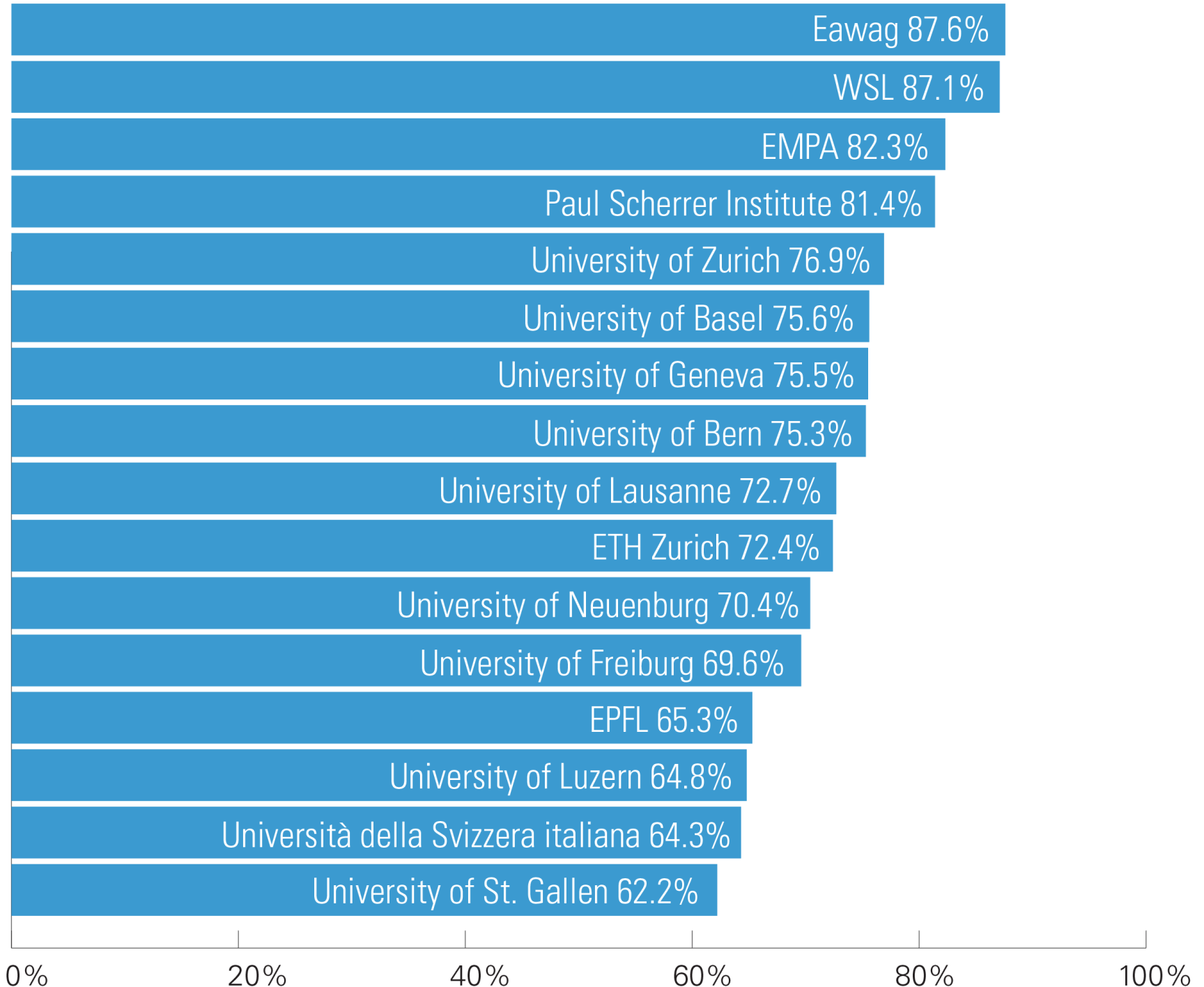
Eawag has been promoting open access for many years and has been making its scientific publications available on the DORA platform (Digital Object Repository at Eawag) since 2016. "More than 87% of Eawag's scientific publications in the period from 2020 to 2024 are publicly accessible," says Lothar Nunnenmacher, head of the library of Eawag and the three other research institutions of the ETH Domain, Lib4RI, which developed and operates DORA. "This is a top figure within the ETH Domain and also compared to other Swiss universities.
Image
Share of publicly accessible scientific publications from various Swiss universities and research institutes between 2020 and 2024. Institutions with subject areas that publish primarily with national publishers, where open access is not yet standard practice in some cases, find it more difficult to achieve a high share. (Graphic: Eawag, data: Swiss Open Access Monitor).
Open access publications are cited four times more frequently
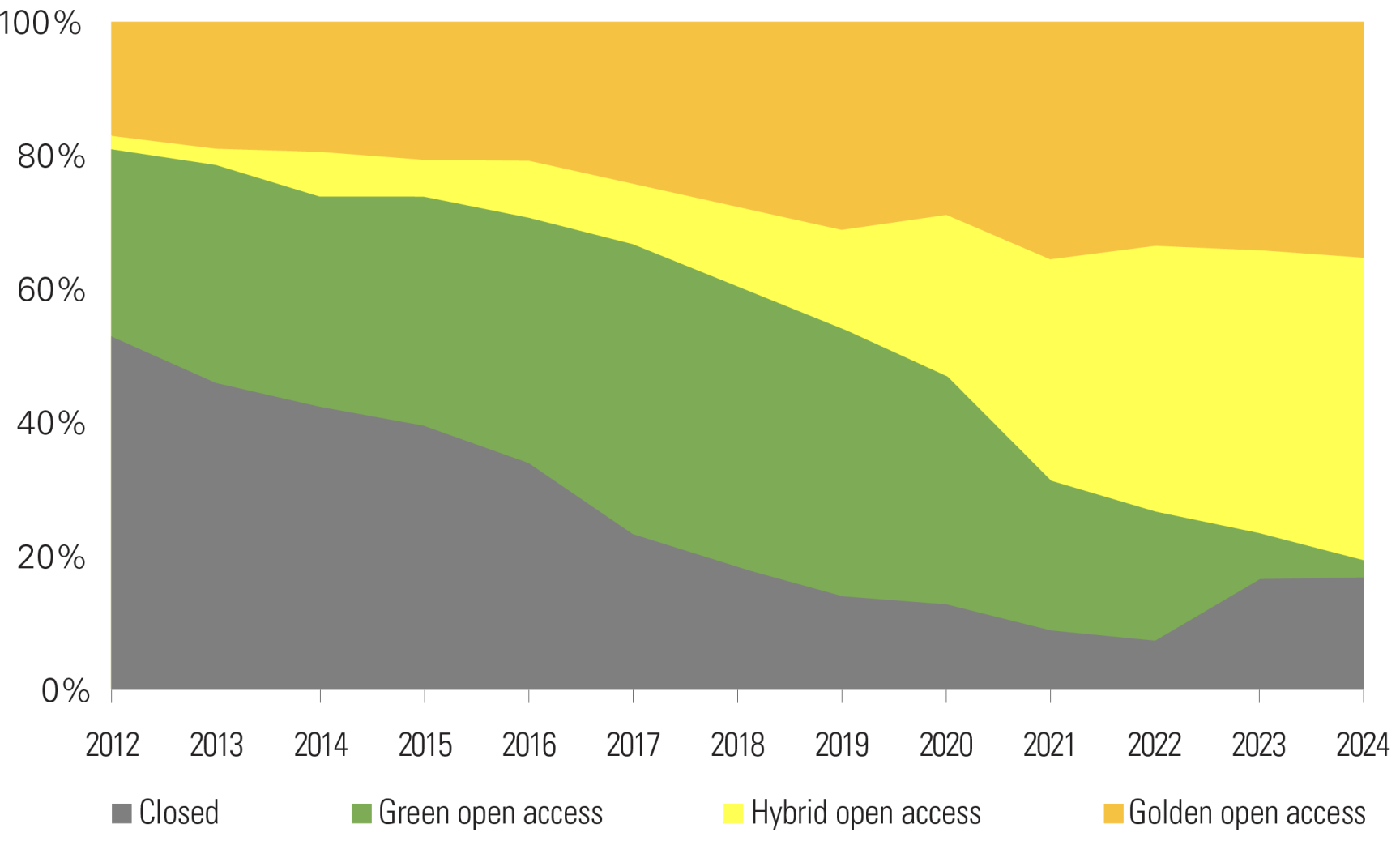
A key factor in this success is the systematic promotion of open access by Swiss universities and libraries. For example, the Eawag library, which is part of the consortium of Swiss university libraries, has negotiated agreements with many journals allowing researchers to publish there with open access. This is no easy task, especially with the large international and highly profit-oriented publishers, and results in different models depending on the publisher (see diagram). In addition, the Eawag library supports researchers with a comprehensive service to motivate them to publish with open access and minimise the associated costs. This also benefits the researchers themselves, as open access publications are around four times more likely to be picked up and cited by other researchers. This increases the visibility and influence of their own research.
Image
Trend in accessibility of Eawag publications over time. The proportion of publicly accessible publications has increased significantly in recent years thanks to systematic promotion. Gold open access stands for publications in scientific journals that are completely open to the public, but often charge authors high publication fees. In the case of journals with hybrid open access, only individual articles are freely accessible. Green open access refers to articles that are not publicly accessible through the publisher, but are available as secondary publications on platforms of the institutions such as DORA, although usually only after an embargo period of several months or years. (Graphic: Eawag, data: Swiss Open Access Monitor)
Levers for further increasing open access
On the other hand, institutions that fund research projects are also increasingly demanding that research results be published with open access. Lothar Nunnenmacher also sees this as an important lever for further increasing the proportion of open access publications. "The EU strictly demands this in its research funding programmes and may cut research funding if the publications are not open access."
Regulations at the legislative level could also help to assert the interests of open access against the powerful large publishers. "For almost ten years now, the Netherlands has had a law that enables the libraries of research institutions to make publications publicly accessible after six months at the latest, regardless of the publishers' stipulations." A similar regulation is currently being negotiated at European level; it could possibly go one step further and prevent embargo periods altogether.
Open science at Eawag
Eawag supports the development towards open and free access to scientific results. In addition to publicly accessible scientific publications on the DORA platform ("open access"), this also includes free access to research data including descriptions, images and software ("open research data"). For the purpose of open research, Eawag has set up the ERIC platform (Eawag Research Data Institutional Collection).
This article was originally published on the Eawag website on 06 January 2026.