Lib4RI-Update #46: Open Access Week 2026, ORE and SNF cap

Lib4RI

In our latest newsletter, we inform you about our events during the International Open Access Week, the Diamond Open Access platform Open Research Europe (ORE) and what the upcoming changes in the SNSF Open Access funding mean for you.

update46_intro

International Open Access Week 2026

“The Cost of Knowledge” is the theme for this year’s International Open Access Week (19-25 October). It offers an opportunity to discuss benefits and challenges of Open Access, problematic developments in the publishing landscape and new innovations to tackle these problems. Lib4RI participates with information booths and a keynote lecture.

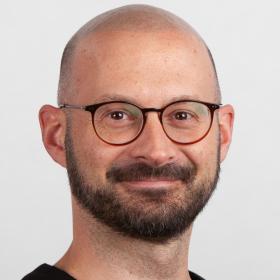
Keynote by Björn Brembs: Replacing academic journals

  • Date: Wednesday, 21 Oct 2026
  • Time: 15:30 - 16:30
  • Venue: Eawag, Forum Chriesbach, FC-D 24 or online via Teams
  • No registration required

Björn Brembs is Professor of Neurogenetics at the University of Regensburg, Germany, and an advocate for reforming scholarly publishing for many years.

Björn Brembs will argue that today’s journal system is structurally broken: a handful of publishers extract far more from public budgets than the service justifies, starving the infrastructure that reliable, reproducible research actually needs. Thus, the research system faces not only a replicability crisis but also an affordability crisis and a functionality crisis. 
Drawing on his paper “Replacing academic journals” he will sketch what a leaner, community-owned alternative could look like.

Mark your calendar Join online

Information booths of Lib4RI

Meet our experts at your institute! Our booth is staffed daily from 11:30-13:30.

Other events in Switzerland

As in previous years, several Swiss universities and libraries have joined forces to put together a wide-ranging program of online, hybrid and local events in different formats for the OA-Week in Switzerland (see here for the full program). Learn more about the International Open Access Week here.

update46_OAWeek

The Diamond Open Access platform Open Research Europe (ORE)

The Swiss National Science Foundation (SNSF) recently announced that Swiss researchers will be eligible to publish free of charge at Open Research Europe (ORE) starting in autumn 2026. This is part of a bigger change of Open Access funding at SNSF (see below, “Upcoming changes to SNSF Open Access funding” for more details).

What is ORE?

ORE is a Diamond Open Access publication platform (see our newsletter #38 regarding Diamond Open Access) established in 2021 and supported by the European Commission. This year, several European funding agencies, including SNSF, have announced their support as well. ORE currently operates on technical infrastructure provided by the commercial publisher Taylor & Francis but the additional funding allows to move the operation of ORE to an open infrastructure hosted and developed at CERN in Geneva. Moreover, due to the SNSF support all publications with at least one author with an affiliation at a Swiss institution will be eligible to publish in ORE; this is irrespective of any project funding of the SNSF or the EU to the authors. At the same time, publications in ORE will be published Open Access and fulfill the Open Access policies of Horizon 2020, Horizon Europe and SNSF.

How does ORE compare to other publishing venues?

Articles in ORE undergo peer review like articles in traditional scientific journals. However, in other aspects ORE is more similar to preprint servers, such as arXiv. This table compares these three venues in more detail.

 Traditional journalPreprint server arXivORE
Screening and selectionEditors and reviewers judge quality and topical fit; novelty and expected impact may also count.Light moderation and check for topical fit and form; endorsement for first-time submitters needed.Only basic checks (originality, readability, ethics, author eligibility etc.); no selection by topic, novelty or expected impact.
When does peer review happen?Before publication.No peer review.After publication.
Is peer review open?In some journals.Not applicable.Yes, reviews are published together with the reviewers’ names.
Must an article pass peer review to be published?YesNoNo, but it must pass to be indexed in literature databases.
Can a published article be submitted elsewhere?NoYes (to the vast majority of journals)No
Layout and brandingTypeset in the journal's house style.None. Authors upload their own files.Articles and versions are typeset in a consistent, functional style.
CostsReaders pay (subscriptions) or authors pay (APCs).Free for authors and readers.Free for authors and readers.
Indexing in databases (visibility, citation tracking, bibliometrics)Indexed at publication, depending on journal (PubMed, OpenAlex, Web of Science, Scopus, Google Scholar).Inconsistent: indexed in Google Scholar, PubMed (if NIH funded), Scopus and Web of Science (in separate preprint collections).In Google Scholar upon publication. Indexing in PubMed, OpenAlex, Scopus and others after peer review.

Several other publication venues have started similar experiments to change the established publication workflow (sometimes called publish-review-curate model). Examples include journals of the European Geosciences Union (EGU; published by Copernicus), eLife or F1000. Ideally, such publication venues manage to combine advantages of preprints (fast publication, immediate Open Access, low costs) with the quality control of the peer review process. Due to the institutional support by EU funding programmes and important national funders, ORE has good chances to establish itself and its publishing model as an alternative to established journals. However, trust in the platform still has to be built. Ultimately, the number and quality of submissions will determine whether Open Research Europe succeeds.

update46_ORE_1

Upcoming changes to SNSF Open Access funding

The SNSF has announced that it will revise the way it funds Open Access (OA) publications. The new rules take effect on 1 January 2027 and introduce a cap on article processing charges, adjust book funding, and open a new route for Open Access publishing through ORE.

What is changing 

Cap on Article Processing Charges (APCs): 3’500 CHF 

  • The SNSF will strictly cap APC funding at 3’500 CHF (incl. VAT) per article. Fees above this threshold will not be covered, not even in part.
  • The cap applies based on the date of manuscript submission (after 1 January 2027), not the publication date.

Adjusted funding rules for book publications

  • The SNSF will only fund OA books that result directly from SNSF-funded research. Qualification theses (PhDs, habilitations) remain eligible even without an SNSF grant supporting the author.
  • Publishers of qualification theses will need to arrange an independent peer review of the full manuscript; internal university evaluations are no longer accepted as proof of quality assurance. In addition, only qualification theses defended at a Swiss university will be eligible for funding.
  • The maximum funding amount for the basic book module will be reduced to 12’000 CHF.

A free alternative: Open Research Europe (ORE)

  • To counter rising commercial publishing costs, the SNSF has joined ORE (see above), a Diamond Open Access platform. Starting in autumn 2026, all researchers in Switzerland are eligible to publish in ORE. This is completely free of charge, avoiding APCs entirely while ensuring immediate Open Access for their publications.

What this means for you

f you are an SNSF-funded researcher planning to submit an article to a pure Open Access journal after 1 January 2027, verify the journal's APC. If it exceeds 3’500 CHF, the SNSF will not cover the costs. Please also note that hybrid journals remain ineligible for SNSF funding regardless of the APC. Use our Lib4RI Search Tool to identify journals that are covered by our Open Access agreements with publishers. For monographs, review whether your project falls within the narrower eligibility rules, and factor the 12’000 CHF basic module cap into your budgeting. 

Consider Diamond OA venues, including ORE once it opens for submissions, as a way to publish without fees while still meeting the SNSF's Open Access requirements. 

Need help? 

Our Open Access team is here to support you. Contact us at @email for personalized advice on journal selection, funding agreements, and SNSF compliance.

update_46_SNF